I first heart about this book in 2018 or 2019, but I don’t think I was ready for it back then.
Firstly I was re-finding my footing as an artist. I was definitely more into sci-fi tech than dystopian. And I was also much younger (…with age comes wisdom!)
But this book is spectacular. And the themes of this book (namely: pandemic and dismantling of society) are right on point of the 2020-2022 years.
This book (for me) was a beautiful intertwining of some important ideas in my life right now: art, family, human interaction, humanity and even how the brain works.
Station Eleven by Emily St. John Mandel is a hauntingly poetic view of humanity’s resilience in the face of collapse. The novel captures the lives of several characters before and after the world as we know it ends. At its heart, the story is a meditation on what it means to survive—not just physically, but emotionally and culturally. Station Eleven is focused on the power of art and the fragility of life and socio-economic norms while urging us to reflect on what truly matters.
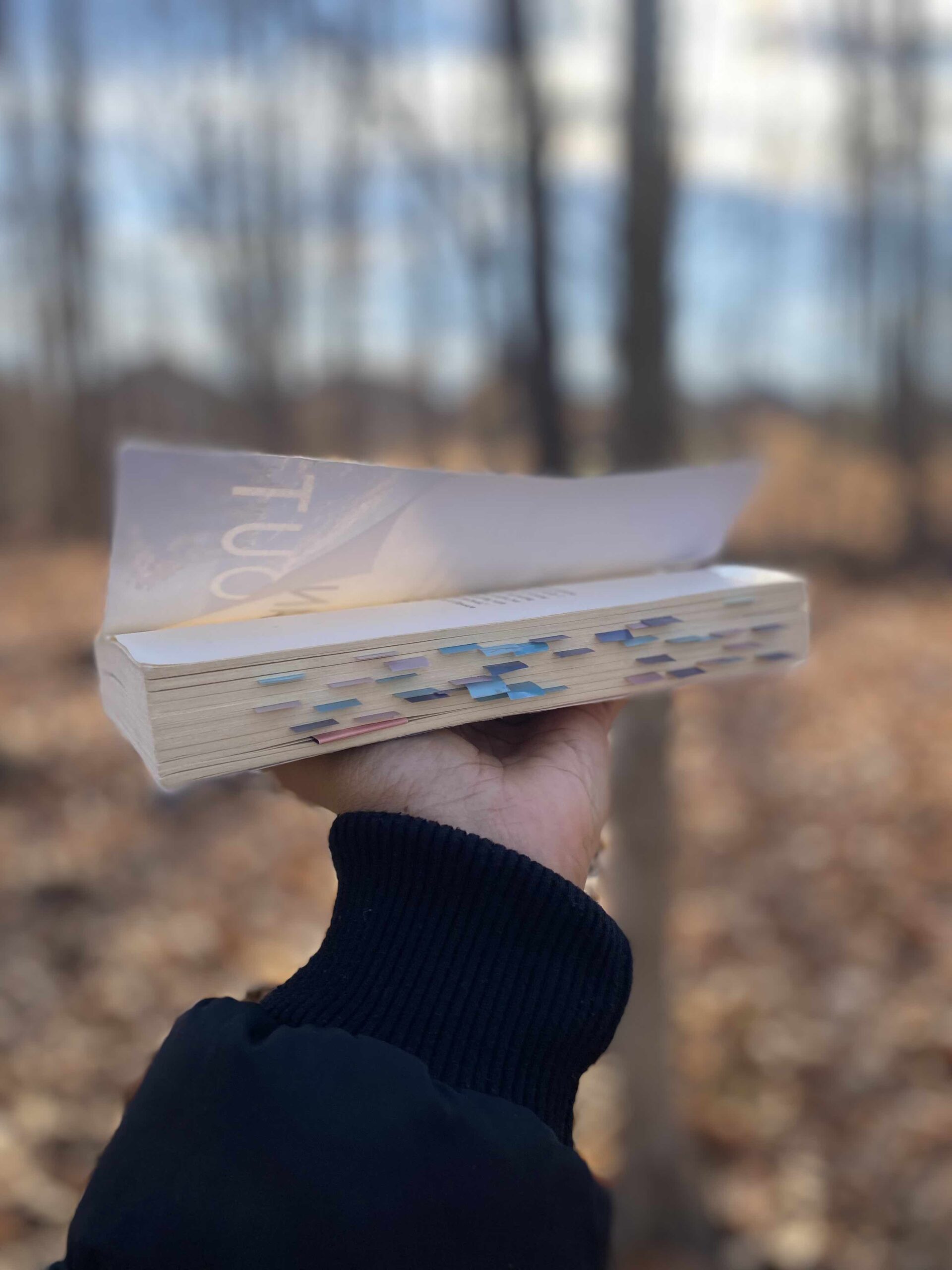
As always (and because I’m a girl who loves a good quote) sharing some of the quotes that I dogeared in the paperback:
and these collection of petty jealousies, neuroses, undiagnosed PTSD cases, and simmering resentments lived together, travelled together, performed together 365 days of the year. But what made it bearable were the friendships, of course, the camaraderie and the music and the Shakespeare, the moments of transcendent beauty and joy when it didn’t matter who’d used the last of the rosing in their bow or anyone slept with.
There had always been a massive delicate infrastructure of people, all of them working unnoticed around us, and when people stopped going to work, the entire operation ground to a halt. No more trains running under the surface of cities on the dazzling power of the electric third rail. No more cities. No more films, except rarely, except witlessly, except for the handful of people who happened to have a generator and a collection of DVDs. No more flight. No more towns glimpsed from the sky through airplane windows, points of glimmering light. No more internet. No more social media, no more scrolling through litanies of dreams and nervous hopes and photographs of lunches, cries for help and expressions of contentment and relationship-status updates with heart icons whole or broken, plans to meet up later. No more reading and commenting on the lives of others, and in so doing, feeling slightly less alone in the room. No more avatars.
What was lost in the collapse: almost everything, almost everyone but there is still such beauty.
“What do you plan to do with it once it’s done?” “Surely you’ll try to publish it?” [the beautiful response] “it’s the work itself that is important to me” [in agreement] “I think that is so great, its like the point is that exists in the world” [in retaliation] “what’s the point of doing all that work” [in response] “It makes me happy, it’s peaceful, spending hours working on it. It doesnt really matter to me if anyone sees it”
What do you live for? Truth and beauty.
Hell is the absence of people you long for
He getting trapped by iPhone zombies. People half his age, who wandered in a dream with their eyes fixed on their screen. He jostled into them on purpose.
You probably encounter people like him all the time – high functioning sleepwalkers. …People like him think work is supposed to drudgery punctuated by very occasional moments of happienss, but when I say happiness I mostly mean distractions. …He realized now that he too had bee half-sleep throught hte motions of his life, not specifically unhappy but when was the last time he found joy in his work. He wish he could go back to the iphone people he had jostled and appolgoize to them. I’m as minimally present in this world as you are.
FIrst we want to be seen, but once we’re seen that’s not enough anymore. After that, we want to be remembered.
Why did we always say we were going to shoot emails? I used to write THX, would it have taken too much time and effort to punch in an extra three letters and just say thanks!
In Shakespeare time, the wonders of technology were still ahead, not behind & far less had been lost.
I recently read Think Again by Adam Grant, and I annotated a lot. Here are the annotations. Hopefully they spark some interest in you to think again (or at least read the book!)
When people reflect on what it takes to be mentally fit, the first idea that comes to mind is usually intelligence. The smarter you are, the more complex problems you can solve – the faster you can solve them….yet in a turbulent world, there’s another set of cognitive skills that might matter more: the ability to rethink & unlearn
When it comes to our own knowledge and opinions, we often favour feeling right over being rights
When we think and talk, we often slip into the mindsets of three different professions: preachers, prosecutors and politicians…We go into preacher mode when our sacred beliefs are in jeopardy: we deliver sermons to protect and promote our ideas. We enter prosecutor when we recognized flaws in other peoples’s reasoning: we marshal arguments to prove them wrong and win our case. We shift into politician mode when we’re seeking to win over an audience: we campaign and lobby for approval of our constituents.
In psychology there are at least 2 biases that drive [our thinking]: Confirmation bias – see what we expect to see [and] the other is desirability bias: seeing what we want to see.
What set apart great presidents was their intellectual curiosity and openness.
Research shows that when people are resistant to change, it helps to reinforce what will stay the same. Visions for change are more compelling when they include visions of continuity. Although our strategy might evolve, our identity will endure.
In theory, confidence and competence go hand in hand. In practice, they often diverge.
The Dunning-Kruger effect – when we lack competence that we are most likely brimming with over-confidence
Advancing from notice to amateur can break the rethinking cycle. As we gain experience, we lose some of our humility.
Confidence Sweet Spot = Confident Humility
Attachment. That’s what keeps us from recognizing when our opinions are off the mark and rethinking them. To unlock the joy of being wrong, we need to detach.
If you want to be a better forecaster today, you need to let go of your commitments of the opinions you held yesterday.
Productive disagreement is a lifeskill none of us fully develop. Research shows that how often parents argue has no bearing on their children’s academic, social or emotional development.
In good fights are the tension is intellectual not emotional
Skilled negotiators: find common ground > ask questions > provide a # of reasons > defend attacks
After establishing the drawbacks of her case, she emphasized a few reasons to hire her anyway: But what I do have are skills that can't be taught. I take ownership of projects far beyond my pay grade and what is defined in my scope of responsibilities. I don't wait for people to tell me what do and seek for myself what needs to be done. I invest myself deeply in my projects and it shows in everything I do, from my projects at work to the projects I do in my own time. I'm entrepreneurial. I get things done. I love breaking new ground and starting with a blank slate.
As a general rule: its those with greater power that need to do more of the rethinking.
When we try to convince people to think again, our first instinct is usually to start talking. Yet the most effective way to help others open their minds is often to listen.
Inverse Charisma (the magnetic qualities of a great listener): a sense of being listened to with such intensity that you had to be your most honest, sharpest and best self.
As consumers of information, we have a role to play. When reading, listening or watching, we can learn to recognize complexity as a signal of credibility. We can favour content and sources that present many sides of an issue, rather than just one or two. When we come across simplifying headlines, we can fight out tendency to accept binaries by asking what additional perspectives are missing between these extremes.
In productive conversations, people treat feelings as a rough draft. Like art, emotions are works in progress. As we gain perspective, we revise what we feel.
We need to encourage students to question themselves and one another.
Lectures are entertaining and informative, the question is whether they are the ideal method of teaching. […] they actually gained more knowledge and skill from active learning sessions (sending students off to find answers instead of the teacher showing the students how to arrive at the answer). It required deeper mental effort, which made it less fun but led to deeper understanding.
Perfectionists are more likely than their peers to ace school, they don’t perform any better than their colleagues at work.
Respond to confusion with curiosity and interest aka “give time to your confusion”
Encourage children to do multiple drafts of the same drawing.
Psychological safety is the foundation of a learning culture
Best practices in corporate imply that we’ve stopped learning, […] instead we should looking for “better practices”
When psychological safety exists without accountability, people operate within their comfort zone.
Change the ownership of psychological safety. (ex: if she says that it’s not safe to launch, the team should prove that it is safe to launch)
Sometimes the best type of grit, is gritting your teeth and turning around.
It’s easy to be a scientist: it’s simply the act of experimenting
I’ve been a reading slump for a few months now mainly because I felt like I’ve been reading too many non fiction books.
I usually set a reading goal for myself every year. I definitely aim high. But this year I’m not confident in getting to that goal. I’m about 40% there with only about 20% of the year left. That means I’d have to finish a book every 1.5 weeks. Seems daunting.
I know I could reach that goal reading a whole bunch of fluff that are easy to get through, but for me – reading is a way to knowledge. So even my fiction books have to teach and inspire me in some way.
So, atlas …I persist.
I do want to share this amazing fiction book I recently read. (I borrowed my book from Vaughan Public Library system because I love libraries (and sustainability). *needs a totebag with that phrase on it*)
Upgrade by Blake Crouch is about a near dystopian future where science has taken on a twisted yet believable turn “DNA editing”. The story weaves between a son (who works for a FBI like agency looking to prevent corrupted gene editing), his sister and his mother (a science genius pushing the boundaries with hopes of saving the earth). There is a lot of scientific jargon (naming of genes etc) with enough depth to help me understand the characters knowledge but also confusing at times (I glossed over that). Blake Crouch is an author that can create drama, intrigue and action to capture the reader’s attention and also help the reader read faster (lol if that makes sense). Since I don’t want to give away any spoilers, I’ll end off here with saying I give this a 5/5 ⭐️
And if you need any further inclination, here are some of the quotes I annotated! Enjoy!
We were on the outskirts of the city doing 120mph. The dual electric motors were almost silent.
Parts of New York City and most of Miami were underwater, and an island of plastic the size of Iceland was floating in the Indian Ocean.
But it wasn’t just humans who’d been affected. There were no more northern white rhinos or South China tigers. The red wolves were gone, along with countless other species. There were no more glaciers in Glacier National Park.
We had gotten so much right. And too much wrong. The future was here, and it was a fucking mess.
I had extraordinary dreams and an ordinary mind.
I wanted to actually do something, you know? It’s the difference between designing a house and building the thing.
Memories were coming back to me, and not just of every book I’d ever read. Random moments of insignificance. Pivotal events that had shaped my life. From a month ago. From a decade ago. From my childhood. It was an eerie sensation. As if someone were brooming out the dark corners of my mind. Wiping off the cobwebs. Repairing frayed connections.
“So you’re saying people are too stupid?” “Not just that,” Miriam said. “It’s denial. Selfishness. Magical thinking. We are not rational beings. We seek comfort rather than a clear-eyed stare into reality. We consume and preen and convince ourselves that if we keep our heads in the sand, the monsters will just go away. Simply put, we refuse to help ourselves as a species. We refuse to do what must be done. Every danger we face links ultimately back to this failing.”
I’d felt it that night and I felt it on this one-being with Kara quenched some evolutionary thirst. A primal, genetic need to belong to a tribe.
We were a bunch of primates who had gotten together and, against all odds, built a wondrous civilization. But paradoxically-tragically-our creation’s complexity had now far outstripped our brains’ ability to manage it.
While I waited for my food, I pulled out a small, leather-bound journal I always carried with me, flipped to the next blank page, and started a new letter.
You’re working off a flawed assumption. Higher intelligence doesn’t make you less greedy or self-centered or evil. It doesn’t necessarily make you a good person.
Right and wrong are constructs born of human sentiment.
Nothing but stories we’ve made up and assigned meaning to. They don’t correspond to any objective reality. The only thing real is survival.
Maybe compassion and empathy are just squishy emotions. Illusions created by our mirror neuons. But does it really matter where they come from? They make us human. They might even be what make us worth saving.
And I was struck, again, as an outside observer, by how much the members of our species needed one another. All these people out in the cold rain. To laugh and drink. To talk about nothing. It was almost as if that need for connection and touch was our … their … lifeblood.
“Consider this. For a time, Kara and I were the only upgraded humans on this planet. And what did we do? Immediately tried to kill each other over differences in belief. You got the upgrade and decided to help Kara release a virus that will lead to mass suffering and death. Doesn’t feel like intelligence itself is the answer. It terrifies me to think of a world where we have all the same problems, a billion less friends, and everyone thinks they’re smart enough to be infallible.”
“So you’d rather have no world at all?” “That’s a false binary. We are in trouble, but that doesn’t mean this is the only solution. Rejecting something that involves killing a billion people isn’t the same thing as sticking my head in the sand while the world burns.”
“You can’t kill humanity to save humanity. Human beings are not a means to an end.”
The temptation to swim over was strong. Barter for break-fast. See about getting a boat. But the commotion at 140 Broadway last night must’ve sounded like Armageddon. Anyone in the vicinity would have heard it, and me stumbling into their midst would only raise an alarm. So I settled for watching them from a distance-this forgotten fragment of humanity making a life together in the most inhospitable of places.
They seemed truly happy, and it made me happy to watch them—a thousand small kindnesses among people who had nothing to give.
We were a monstrous, thoughtful, selfish, sensitive, fearful, ambitious, loving, hateful, hopeful species. We contained within us the potential for great evil, but also for great good. And we were capable of so much more than this.
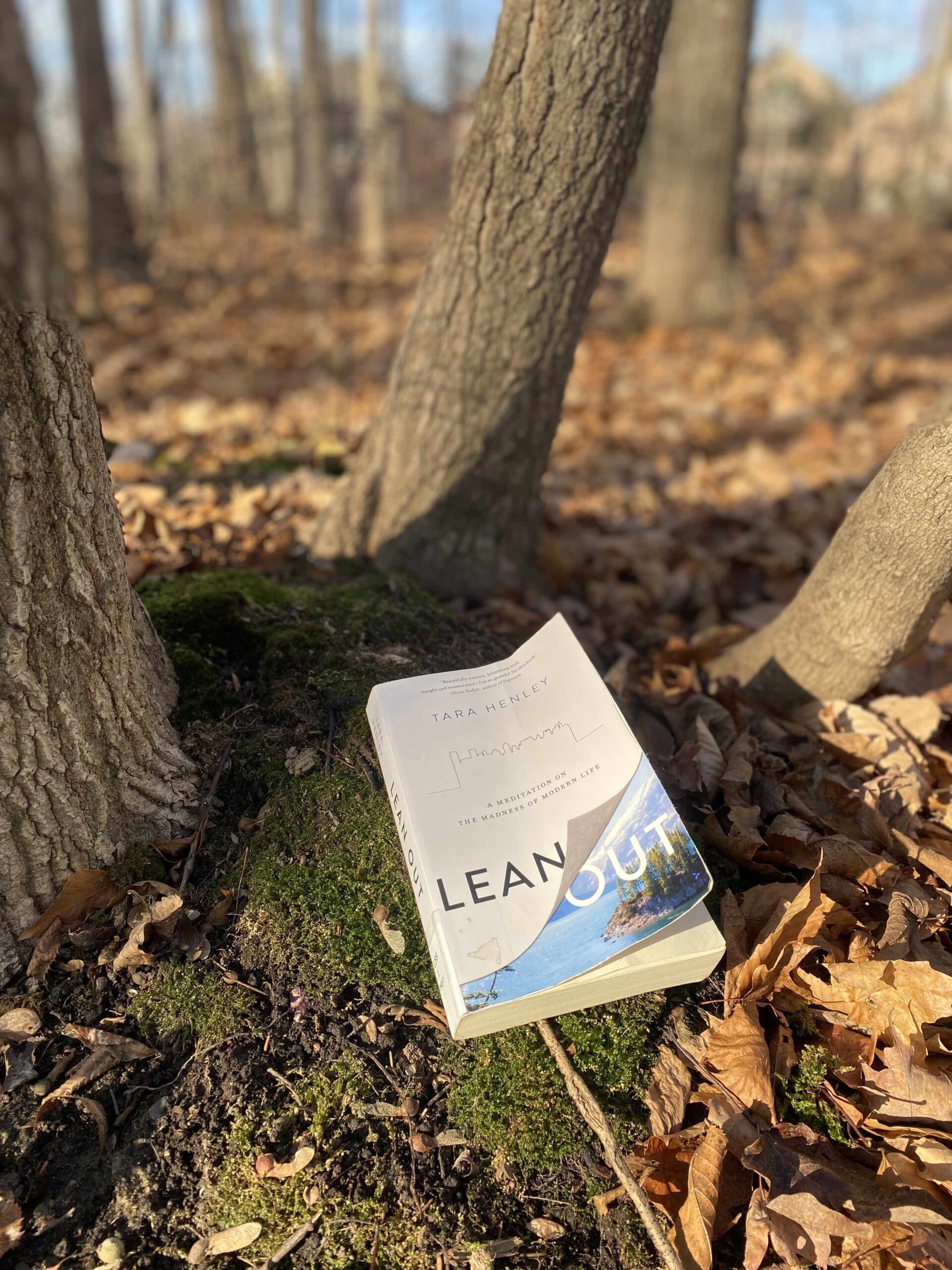
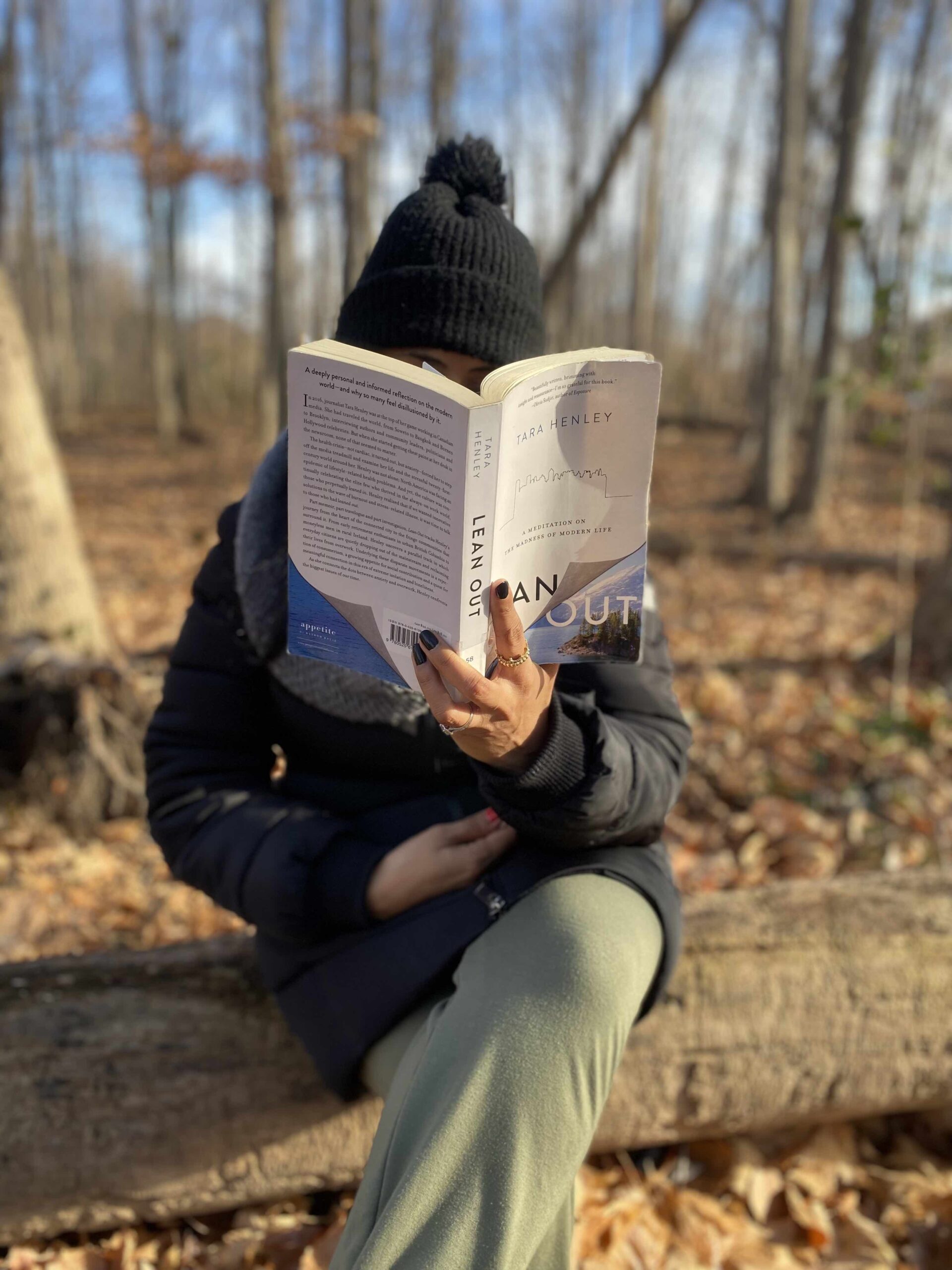
I read “Lean Out” last year, and as you can imagine – it pokes holes in the lean-in narrative. I was never able to get behind or even read lean-in. It didnt sit well with me (even though I had only heard about it in passing). The quotes below are the reason why I would rather lean out.
Pg 38 – As I did, the dispair of the city seeped in through my pores, rearranging the molecules in my body and plunging me into darkness.
Pg 39 – In societies with a massive gab between the rich and the poor, everyones physical health suffers, even the rich… Likely caused by lack of social cohesion. A result of severed connections.
Pg 53 – I was primmed to seek my solace here, among the trees.
Pg 54 – Shinrin-yoku (forrest bathing), essentially meditation in wooded settings have been shown to reduce stress chemicals….those who spent time in nature inhaled plant-based compounds that increased white blood cells. Forest walks have been proven to relieve confusion.
Pg 63 – What exactly would life look like if it was not lived in fast forward? What would it mean to live simply, slowly and in harmony with the natural world? Was there anyone who was leaning out?
Pg 64 – Every day on the bike trip is like the one before – but it is also completely different. Or perhaps you are different, woken up in new ways by the mile.
Pg 67 – The model of the modern cosmopolitan woman, whose lifestyle is now as oppressive as her job. She works until 1am, and is so harried she barely has time to chew her 12 dollar chopped salad she buys every day at her Sweetgreen (served up in record time by fevered clerks “as if it were their purpose in life to do so and their customers purpose in life to send emails for sixteen hours a day with a brief break to snort down a bowl of nutrients that ward off the unhealthfulness of urban professional living”)… The salad represented a kind of idea for a creative class. It was a symbol of…you work all f—— day and you just do everything as efficiently as possible, including your lunch….and the workers handling ticket orders like they were stock brokers. This monstrous efficiency struck me as so upsetting.
Pg 68 – For what Barre is truly good at is “getting you in share for a hyper-accelerated capitalist life”… These classes prepare you “less for a marathon than for a 12 hour workday, or a week alone with a kid and no child care, or an evening commute on an underfunded train”.
Pg 73 – “Just because we care about our children, and our parents and the environment, doesn’t mean we we don’t want make our mark on the world and bring our creative magic”.
Pg 81 – There are of course, lots of other reasons to eat: pleasure, identity, ritual & community
Pg 113 – I think we should not be focusing on everyone having a job, we should be focusing on everyone being able to survive with the bare necessities. He thought we were waking up to the lie of advertising… a “manufactured inadequacy” that made people believe they were not complete
Pg 124 – Early retirement helps the planet because it gets the fortunate people to consume less fossil fuels and natural resources.
Pg 127 – Like many gen-x’ers who came before the age of the internet, I missed the way time used to feel. The vast expanse that was the weekend, with it’s stretches of uninterrupted hours. The deep contemplation of staring out a window, or sitting on a bus. The luxuriousness of being out in the world for hours, days even, untethered from work, unimpeded by the pressure to respond to texts and emails and social media. Free to think, and be, and focus on what was in front of you. Which was, generally, other people. People who were similarly focused, similarly engaged. There were other things I missed, too. Phone calls, neighbors, walking down the street without people steering into me absentmindedly, engrossed in their phones. The whole character of public space, really. What it felt like to sit in a café before we all had to listen to each other’s work calls, made in that exaggerated professional voice everyone uses. Eye contact and casual conversation; not sitting in isolated islands, hunched over devices, in thrat to flickering lights. What friendship felt like before social media, and dating before texting and apps. Punctuality. Privacy. Newspapers, long attention spans, foldout maps. The experience of being lost in a city, unaccounted for. Boredom, even.
Pg 138 – A love born out of shared pain, but also shared joy. At managing to make something beautiful from this mess. At putting pain into words, and having those words mean something to someone else. Easing someone’s pain, in however small a way.
Pg 143 – The digital world now felt utterly inescapable “even if you dont want to participate, all you are really doing is putting your head in the sand”
Pg 144 – Facebook founders knew that they were building systems that exploited a vulnerability in human psychology – and went ahead and did it anyway….God only knows what what it does to [our] brains. The short-term dopamine-driven feedback loops are destroying how society works. Leading to a lack of civil disclosure, misinformation and mistruth.
Pg 148 – The ever intensifying industrialism: wide spread surveillance in our pockets, colonization of wilderness, indigenous lands and our mindspace. When you are connected to wifi, you are disconnected from life. It’s a choice between machine world and the living breathing world.
Pg 152 – What gave me joy was pretty simple: waking up everyday without an alarm, reading all the books on my nightstand, eating when I was hungry, rest when I was tired, moving my body everyday, being outside and cooking for those I cared about <3
Pg 172 – There is a Western mindset of more more more. Of packing too much into too little time. Of doing instead of being. Of rushing around all of the time. Going forward, I knew I must find a way to dwell in the calm.
Pg 177 – Throughout history, we have needed each other to hunt and gather, to defend against attacks from animals and other humans, and to brave the extreme weather conditions. But now, as we buy prepackaged meals, live alone in secure, climate controlled condos – that need is no less powerful. We are still hardwired for connection and interdependence. And when we don’t have it – we sink into despair.
Pg 178 – Of course I feel anxious in a society where a homeless man could stand outside a gourmet grocery store, largely ignored, selling community newspapers to make enough money for a sandwich, while mega-mansions a few blocks away sat empty and unused.
Pg 186 – There is a snowball effect to loneliness. Brain scans show that lonely people are suspicious of social contact, perpetually scanning for threats. On a subconscious level, they know nobody is looking out for them, so they become hyper-vigiliant. Which in turn makes them hard to be around.
Pg 198 – Our brains are wired for collaboration, cooperation. Serving others gives us a rush of oxytocin and the sense of belonging so many of use are lacking these days. It goes back to tribal life, and how much we’ve always depended on each other for survival. And it’s why experts often suggest volunteering to people who are suffering. These days, volunteer work has gone the way of other work, becoming intensely bureaucratic, competitive and all consuming. But applying to become a volunteer was, I soon discovered, exactly like applying for a job.
Pg 202 – Profound healing is possible. Probable even, under the right conditions. But in order to foster these conditions we have to stop telling the story of healing as one of individual triumph, and start acknowledging the role of the tribe. We have to focus on what we must do for each other, instead of what we must do for ourselves.
Pg 209 – So Senghor dove into autobiographies, looking to see how other people had overcome adversity, how other people had healed.
Pg 220 – The concept of home is a tricky one in the 21st century. For those of us born with Western passports, there are now endless options for how and where to live. This mobility is a gift an a curse. As globalization spreads, we of fortunate birth fan out, following the jobs from one country to the next, loosing each other as we go.
Pg 234 – What they eventually discovered was that in the US, if you wanted to become happier, you did something for yourself. You buy something, you show off on instagram, you work harder. Where as in more communal countries, if you wanted to make yourself happier, you did something for someone else: friends, family, community. We have an implicitly individualistic idea of what it means to be happy, they have an instinctively collective idea of what it means to be happy.
Pg 249 – What are our needs for happiness? [quoted by the mayor in Happy City]: We need to walk, we need to be around other people, we need beauty. We need contact with nature, and most of all, we need not to be excluded. We need to feel some sort of equality.
Pg 250 – Connecting the dots on the epidemic of overwork and anxiety had not led me to unplug from society, leaving a trail of helpful tips for readers in my wake. It had instead led me here, to the most pressing issue of our time: economic inequality.
Pg 253 – I’m talking about the psychosocial effects of inequality. Feelings of superiority and inferiority. Of being respected and disrespected. Status competition. Which he believes is also driving the consumerism in our society. Which leads to widespread feelings of insecurity, even violence.
Pg 256 – The ideology of MarketWorld is defined as a rising powerful elite (of people) operating on contradictory impulses – both to do well and to do good, to change the world while also profiting from the status quo…. We talk a lot about giving more, we don’t talk about taking less.
Pg 263 – Facebook has solved harder problems than this. Companies like Facebook have the imagination and the resources to implement better leave and flexibility in working hours so parents don’t have to choose between their children and their careers. It may come as a cost initially, but the return on investment will be more women staying in the workplace, higher employee satisfaction and the knowledge that we are doing right be our people and children.
Pg 263 – Sandberg’s upbeat philosophy then, disregards the crushing realities of the current labour market for women. I believe telling women to raise their hands and try harder in the open sea of hostility we face in the workplace is like handing a rubber ducky to someone hit by a tsunami (Katherine Goldstein, a former lean-in advocate turned critic). It inadvertently encourages us to internalize our own discrimination, leading us to blame ourselves for getting passed over for raises, eased out of our jobs, not getting called for job interviews and being denied promotions.
Pg 263 – the biggest lie of lean in is the underlying message that bosses are ultimately benevolent, that hard work is rewarded and that if women shed the straight jacketof self doubt, a meritocratic world awaits…. this is untrue. We have Sandberg fretting about the “ambition gap” and to work up to the very moment we give birth…and then resume emailing from the hospital beds immediately afterwards. What kind of life is that?
Pg 264 – If we are honest about it, if we look at the actual numbers, overwork is essentially taking all of our precious life energy – all the hours we could be spending with family, laughing with friends, learning new hobbies, getting out into nature, exercising our bodies, eating home cooked meals, sleeping, participating in our communities and creating real change – and converting all of that time and energy into profit. Profit in fact, for a very small group of people.